
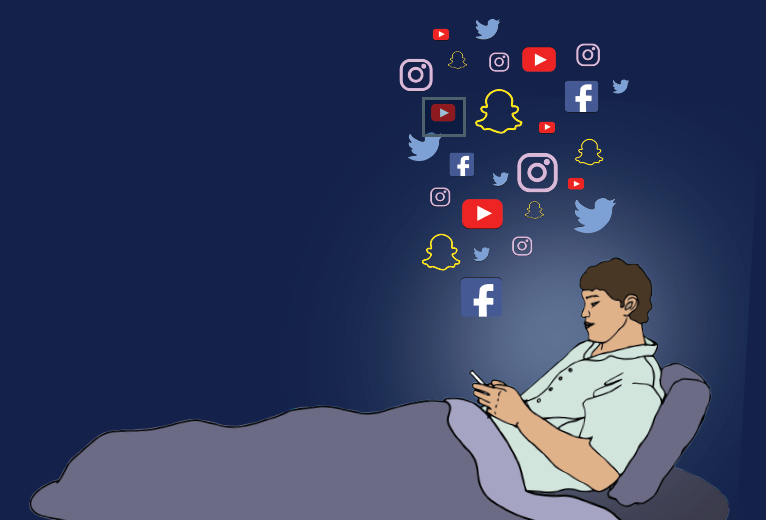
The national media has recently taken note of new research on the apparent link between two interrelated phenomena, both increasingly found among youth. They are:
- A young person’s level of activity on social media, and
- Worsening symptoms of Attention Deficit Hyperactivity Disorder
I wasn’t at all surprised to read that. The fragmented, distraction-filled environment of social media is a natural in terms of aggravating existing attention or hyperactivity problems in youthful users.
Here’s the surprise: Rather than being related to the amount of time spent on social media — as has been widely assumed — the link is instead to certain characteristics in the youth’s behavior.
One of many articles on the research and its findings:
Boys’ Social Media Use Tied to Rising ADHD Symptoms
Study suggests ‘addictive’ use precedes worsening attention symptoms in boys down the road
The signs of this so-called addictive use will be the familiar ones:
- Preoccupation with what happens online, often over competing “real world“ events;
- Using social media as a primary escape from stress and the problems of daily life;
- Restricting or abandoning “real-world” relationships in favor of the online variety;
- Neglecting school and other responsibilities because of activity on social media
- Evidence of failed attempts to reduce or eliminate social media use
Those signs and symptoms happen to be shared by most people who arrive in treatment for opioid or alcohol or stimulant disorders. They’re behaviors that clinicians use to help identify and evaluate addictive disorders in their patients.
It also suggests that this is something we can and probably should address directly as part of the larger counseling process. No, it’s not in the DSM at this point, but there’s a good chance it eventually will be–– perhaps as a co-disorder along with ADHD.
One way we can positively affect a patient’s ADHD symptoms is by making changes in his online activity. I say “his” because the research was conducted on boys. I’d be surprised if it didn’t apply to girls as well. ADHD has traditionally been found less frequently among females, but there are signs that that too is changing.
Let’s face it: social media is not going away. Nor is it likely to become less popular in the coming decades, given the influence of AI. We should accept it as a force in the development of many youth.
I suspect that it will be, whether we like it or not. The goal should be to influence it in the most positive direction.