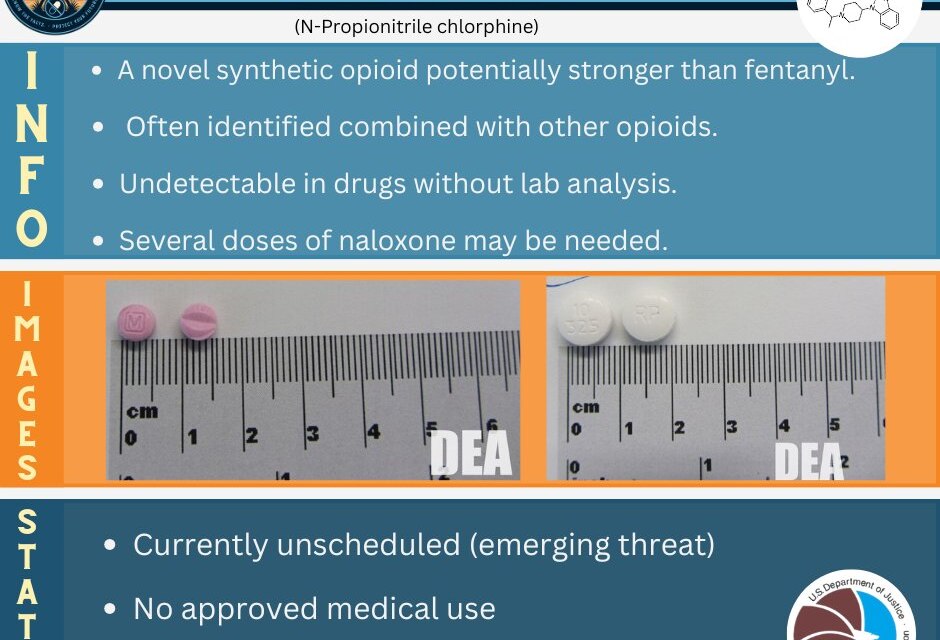
No, we don’t want any more new drugs of abuse, thank you. Nevertheless, it appears that we’re getting one.
It’s an opioid, naturally. Synthetic in origin, probably highly addictive, if it doesn’t kill the user first — which it might very well do.
Its name: cychlorphine. It’s incredibly dangerous. And it’s showing up in the news in stories like this one.
Teen’s death sparks warning over opioid stronger than fentanyl
Like fentanyl, cychlorphine is often mixed in with better known substances such as methamphetamine and cocaine, without the user’s knowledge, of course. That just makes it doubly dangerous.
Some of the more interesting characteristics of cychlorphine:
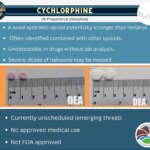
- Microscopic amounts can cause rapid and fatal respiratory depression.
- Due to its extreme potency, multiple doses of naloxone are frequently needed to reverse its effects and stop an overdose.
- It belongs to the orphine class of powerful, man-made opioids, as opposed to the morphine derivatives.
- Standard hospital urine drug screens and conventional fentanyl test strips are typically unable to detect cychlorphine,
- Born in the 1960s in a lab in Belgium, cychlorphine was originally intended for use as a pain reliever and a surgical aesthetic. Sound familiar?
- Cychlorphine never made the cut, due to its propensity for causing severe breathing failure, and was subsequently abandoned. But outlaw chemists revived it for street sale around 202o — part of their never-ending search for stronger and stronger opioids..
I’m sometimes asked to explain the extraordinary potency of certain opioids, including cychlorphine. I usually fall back on the “lock and key” model of neurotransmission.
Think of the brain’s opioid receptors in terms of a lock and the individual drug as a kind of key. Some keys (some drugs) are shaped in such a way as to fit the keyhole more exactly than others, and remain for a longer period of time.
These drugs produce greater effects than others do — in this case, far, far greater effect.