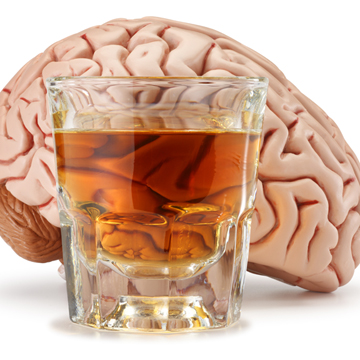
…stop drinking alcohol, that is, for an extended period, regardless of reason. It makes a difference if your previous drinking qualifies as heavy, but even if it doesn’t, you’re still likely to experience a number of changes.
Science is becoming clearer as to what those changes might be. A recent article on the subject:
Here’s what happens to your brain when you stop drinking alcohol
My primary interest lies in what happens to people with high-moderate to severe alcohol problems, once they do quit drinking.
“Well, for one thing, they stop getting worse,” observes a colleague. Let’s hope. But what about getting better? How much (if any) improvement can they expect — and how soon?
As the article notes, a 2024 systematic review of studies found that people with Alcohol Use Disorder (AUD) who successfully abstained from drinking experienced significant improvement in a number of crucial cognitive abilities — including the all-important areas of attention, memory and executive function — after only 6 to 12 months.
By “recovery”, I presume they mean a return or near- return to “normal” levels of function for their age and development.
Earlier studies had put the timeframe at closer to three years. This is more promising.
From the research: “…there was a general recovery in frontal brain regions with increases in gray matter… Greater changes occurred relatively early in abstinence, within the first month.”
What about reducing alcohol consumption to low levels, without full abstinence? I imagine a lot of heavy drinkers try that first. It does help: in addition to increases in cortical brain volume. the research confirmed gains with respect to cognitive function.
That’s important, because the early days of treatment can include a number of brief lapses to drinking before recovery finally stabilizes. Good to know there may still be some improvement in spite of that.
There is also evidence that the brain may “develop compensatory strategies and functioning” to offset some of the damage done.
The extent of that damage does appear to be dose-related.
Again per the article, a study of over 25,000 participants found “smaller total gray matter volumes for people who had seven or more drinks a week compared with those who consumed fewer drinks.”
Furthermore, “A 2024 systematic review of 27 neuroimaging studies found that low-to-moderate drinking was linked to smaller brain volume and cortical thickness, though to a lesser extent compared with heavy drinking.”
When researchers say “heavy” drinking, they ordinarily mean more than four drinks per day, 14 a week, for men. For women, beyond three drinks a day, or seven weekly.
You might say that the more we drink and the longer we continue drinking, the greater the consequences for our brains. It should be a relief to know that at least some of that impact isn’t likely to be permanent.