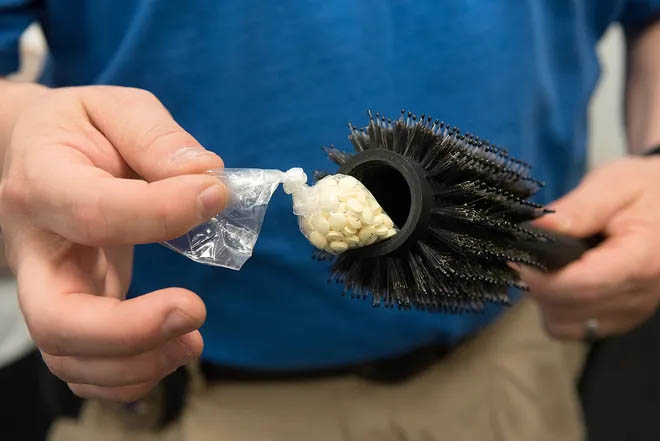
You may have heard about two recent deaths that occurred in rehab facilities — one in South Carolina, the other in Malibu. Such fatalities are rare, but attract plenty of attention. People wonder why somebody would go to the trouble of signing into a treatment facility, only to promptly return to drug use.
It is confusing.
Aren’t drug programs supposed to be drug-free? How do patients manage to sneak drugs into the facility in the first place?
I’ve had to answer questions like these at least a thousand times, and I’ve learned it’s best to deal with the second question first, since the answer is so much simpler.
Drugs get into drug programs in one of two ways. Either the patients smuggle them in themselves, or someone else does it for them.
As has for how, it’s done in a number of ways. They fall into five basic categories.
- Personal Items: Programs sometimes find drugs hidden in the seams of clothing, in the soles of sneakers, in bars of soap, in cans of body powder, or inside books and electronic devices. The staff’s main defense is to search the patient’s belongings at time of admission. As for how effective this practice is in terms of preventing contraband, that depends on the skill of the searcher and the determination of the searched. All I can say is that I’ve never seen a rehab with a 100% success rate.
- Body Cavities: this involves concealing small packages or wrapped items on or inside the body. Jails and prisons do full body searches, but most therapeutic programs do not. It’s very intrusive and a person who wasn’t under sentence of the court ordinarily wouldn’t permit it.
- Mail and Packages: Rehabs commonly reserve the right to inspect personal mail. That’s led some creative types to paint the backs of stamps or the flaps of envelopes with liquefied hallucinogens. I’m not sure that actually works, but I know people who have tried.
- Visitors: Smuggling concealed items during visits or on family days. One case actually involved mouth-to-mouth transfer from wife to husband via a French kiss. (Not making that up.) (They got caught.)
- Drop-offs: An accomplice hides drugs on the grounds, say in a smoking area or meditation garden, to be retrieved later. I’m told decorative planters make a top flight hiding place.
There are outliers. I read one account of a dealer who would bounce a tennis ball all the way up to a customer waiting in an upper floor window. “You’d insert money in the ball, bounce it back down, and it would be returned carrying the amount of dope you wanted…”
Where there’s a will? There’s also a way.
In the next installment, we’ll take a look at the all-important question of why?