Today’s topic springs from a problem originating in the United Kingdom— but one that could easily emerge in the US as well. I’m referring to the question of whether government reports have understated the real number of opioid fatalities.
That would be bad news, indeed. It would undermine confidence in our supposedly successful efforts to stem the tide of overdose deaths.
The original article, that first appeared in The Guardian:
Synthetic opioids may have caused hundreds more UK deaths than thought
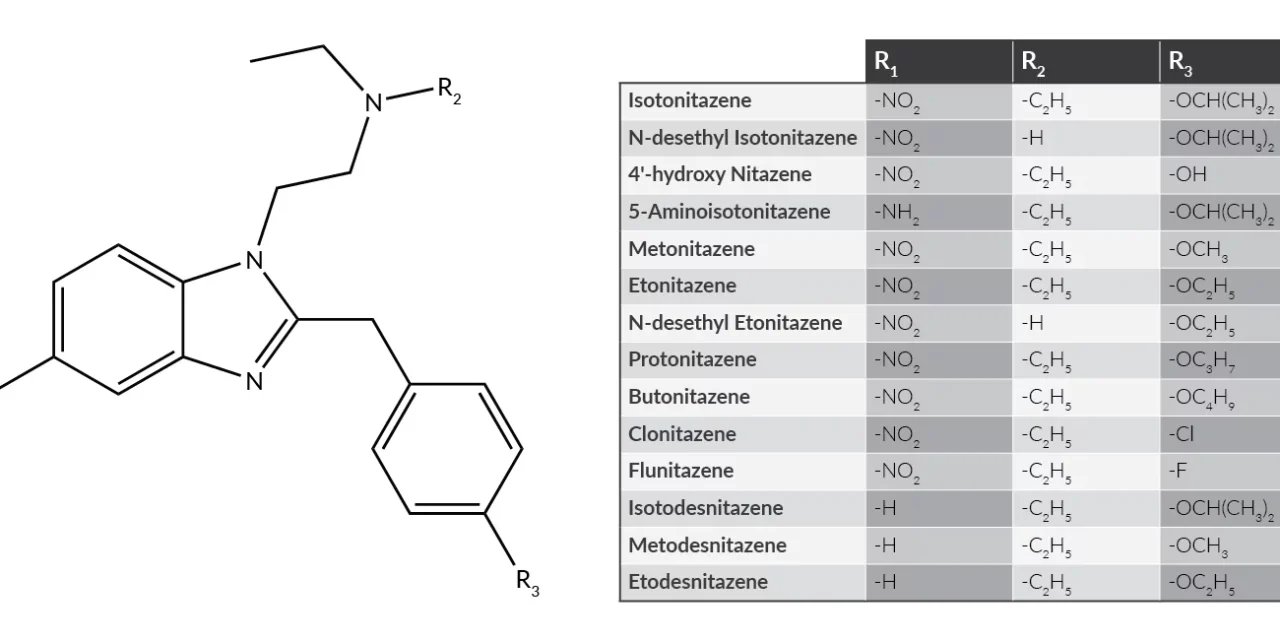
The alleged culprit: nitazenes in the illicit opioid supply. We’ve written about this before (here.)
According to the British study, nitazenes degrade quickly in the body, and are therefore quite difficult to detect in portmortem blood samples. That means they’re likely to be gone by the time we go looking for them.
Nitazenes can be remarkably dangerous to a user. Even a tiny amount can lead to a fatality. That’s why it’s important to detect their presence ASAP in an overdose situation. If nitazene use is in fact increasing among drug users, special measures may be required.
And it brings up another question: If nitazene use is prone to fatal outcomes, then why do drug traffickers make and market nitazenes widely on the street? And often, anonymously, meaning the user isn’t aware of the presence of nitazenes at the time of use, and therefore can’t exercise caution.
Seriously, where’s the incentive to distribute a product that could potentially kill your best customers? How in the world could that be considered a smart business move?
Here’s a reasonable explanation, from a recent article.
“…these new synthetic opioids are cheap and easy to buy… Unlike opium, nitazenes… can be produced anywhere in the world using precursor chemicals …that are often uncontrolled and widely available.”
Okay, I get that — nitazenes are cheaper, and outlaw chemists aren’t too picky about ingredients. As for availability, it turns out that “…nitazenes are not limited to the dark web. They are widely and openly advertised on the internet, social media and music streaming platforms…”
”This means drug dealers in the UK and across the world no longer need to have established connections to underworld figures… With a click of a mouse, they can have them delivered to their home address. In this sense, the internet has democratised the drug trade by widening access beyond ‘traditional’ criminals.”
I’m sure the bad guys think, “ah, so what if some people die? We got paid. And there’s always another customer waiting.”
Anyway, here’s a link to the aforementioned article.