Several articles on the genetics of mental health disorders appeared in this month’s media. Here’s one of the better ones:
That’s right: A number of the most frequently diagnosed mental health disorders may share genetic roots– in fact, they may not be unique disorders, but expressions of common vulnerabilities.
The 14 are, in alphabetical order, “ADHD, alcohol-use disorder, anorexia nervosa, anxiety disorders, autism spectrum disorder, bipolar disorder, cannabis-use disorder, major depression, nicotine dependence, OCD, opioid-use disorder, PTSD, schizophrenia, and Tourette syndrome.”
That’s quite a list.
The research itself is new, but the questions around how mental health disorders are classified have been swirling for decades, without a clear resolution. Perhaps these newer findings will help advance the field towards better answers.
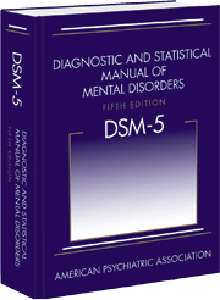
Currently, psychiatric disorders are identified primarily by their symptoms— something experienced by the patient, such as depressed mood, anxiety or panic, visual or auditory hallucinations. The subjective nature of experience has led to questions about the validity of our diagnostic categories.
Are they really distinct disorders? How can we be certain? And since so many of the DSM disorders share symptoms, what do we do when we run into a patient who meets criteria for more than one? It’s not uncommon. That forces the clinician to tease apart various possibilities to uncover the most likely candidates.
Things can get complicated.
As an aside, I’ve run into families where, for example, alcoholism seems to run througout the males over multiple generations, while the women appear to have been prone to depression, often quite severe. When I asked if they thought this could be due to inheritance, they would look at me as if to say: “Well, duh.”
But were we looking at two different disorders on a parallel course through the generations? Or a single genetic vulnerability, expressing differently depending on one’s sex?
Your guess is as good as mine.
As one of the study authors wrote: “The team’s new research… provides the best evidence yet that there may be things that we are currently giving different names to that are actually driven by the same biological processes.”
Now that would be worth knowing.