Last spring, I stumbled across a news item about the anniversary of the official declaration of America’s War on Drugs, on June 17, 1971, by order of President Richard Nixon. That was only a few weeks after I had graduated from college, gotten married, and taken off from Ohio for the San Francisco Bay Area, where I planned to look for a job.
Any job, really. I was an English major. No real career path.
The first real job I found was in a newly- launched alcohol and drug treatment program in Marin County, a few miles north of the Golden Gate Bridge. Being a new graduate with no discernible credentials, I was assigned the least desirable tasks, including observing detox patients as they gave urine samples. Basically that involved standing in the doorway behind the fellow as he peed into the little bottle, to ensure he didn’t interfere with the sample to avoid detection.
I did a pretty good job of that. I could say with some assurance that the detox patients weren’t fiddling with the sample while I was watching. But as it turned out, there were a whole lot of other ways they could cheat on the process. They were hard at work coming up with them.
For each move the staff made to discourage them from cheating, the patients, at least a few of them, were able to come up with a counter move. Some were truly ingenious.
And this was in a closed hospital environment, remember, with a locked door and round-the-clock staffing. Somehow, it was never enough.
I worked at that program for six years, and although I moved into counseling, the conflict never actually ended. It might go dormant for a few months, but then an outbreak of attempts to cheat would follow. Cheating was akin to an airborne virus in a crowded room.
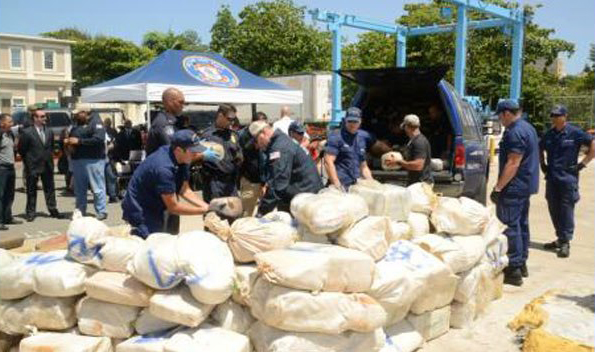
It occurred to me that, as with cheating, as long as the incentive to smuggle drugs remained, the attempts would never stop for very long. The so-called War on Drugs would become a never-ending cycle of moves and counter-moves.
It’s now in its 54th year. At present, the emphasis is on interdiction, the supply side. Meanwhile, we struggle with cuts in resources for treatment and prevention – the demand side.
That’s in spite of all the failures, the lessons learned, the research that was conducted over the past 54 years of trying.
By the way, here’s something from CNN on the subject: