It’s a good question. In fact, folks in the addictions field have been arguing about the existence of an “alcoholic personality” for many decades. Yet science has never successfully arrived at a positive conclusion, and not for lack of trying.
As one researcher wrote, following his own investigation:
“The limited experience of many investigators leaves the impression that there are certain features unique to the personalities of alcoholics. However, scientific reports to date do not permit us to define such an alcoholic personality, or even to come to any substantial agreement as to what it may be like. It seems more likely that a number of personality types have a peculiar susceptibility to alcoholism.” (John D. Armstrong, “The Search for the Alcoholic Personality”)
When we treat people who suffer from moderate to severe alcohol disorders– the so-called “alcoholics”– it quickly becomes obvious that, in terms of personality, it’s a diverse population that does share certain behavior patterns– but nothing akin to a single, unitary personality type.
The experience of being alcoholic, however, definitely changes people’s behavior. That further complicates things.
As you may have guessed, this discussion stems from the recent series in Vanity Fair, in which White House Chief of Staff Susie Wiles characterized Donald Trump as having an “alcoholic’s personality.”
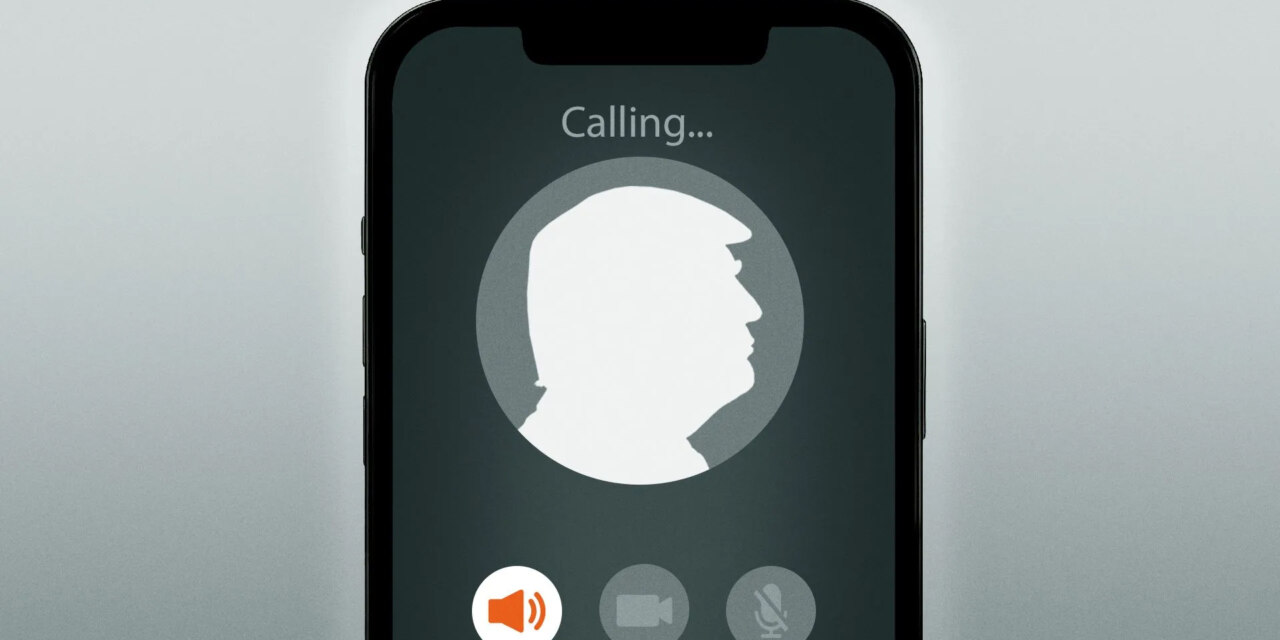
As soon as I heard that phrase, I pictured an older individual, usually a man, on the telephone in the middle of the night, awakening others in order to rant drunkenly about various complaints and resentments of interest only to him.
I’ve never actually been on the receiving end of such a call, but I’ve known plenty of others who have. Drunk dialing, it’s known as, or sometimes, telephonitis. It’s apparently an unpleasant experience for the victim.
I have to admit, it’s easy to imagine our current President doing just that– maybe by text instead of telephone, or on the former Twitter, but exhibiting much the same behavior. That would seem to make it a stereotype, rather than a personality type. Still, we all know the current President doesn’t drink, so how could it be applied in this case?
Perhaps in the context of the phenomenon known as the dry drunk. Defined, per Wikipedia, as “…an alcoholic who no longer drinks but otherwise maintains the same behavior patterns of an alcoholic.” The source of that term: AA co-founder Bill W.
In this case, the “drunk dialer” may not use alcohol himself, but the disease runs strong in his family — his older brother died at 42 from unspecified “complications of alcohol abuse.”
Anyway, Susie Wiles goes on to explain that her own father had been severely alcoholic, so she was familiar with the behavior, and probably uniquely qualified to deal with it in her boss. She also claims that she was not an enabler, although I found that tough to swallow.
In my experience, it’s difficult if not impossible to be so closely involved with someone who is behaving in such an exaggerated, abusive, destructive, and self-destructive manner, as described here— without evolving some of the traits we associate with codependency. Simply in order to cope.
Otherwise, they’d have to leave. Life would simply become too difficult to bear.